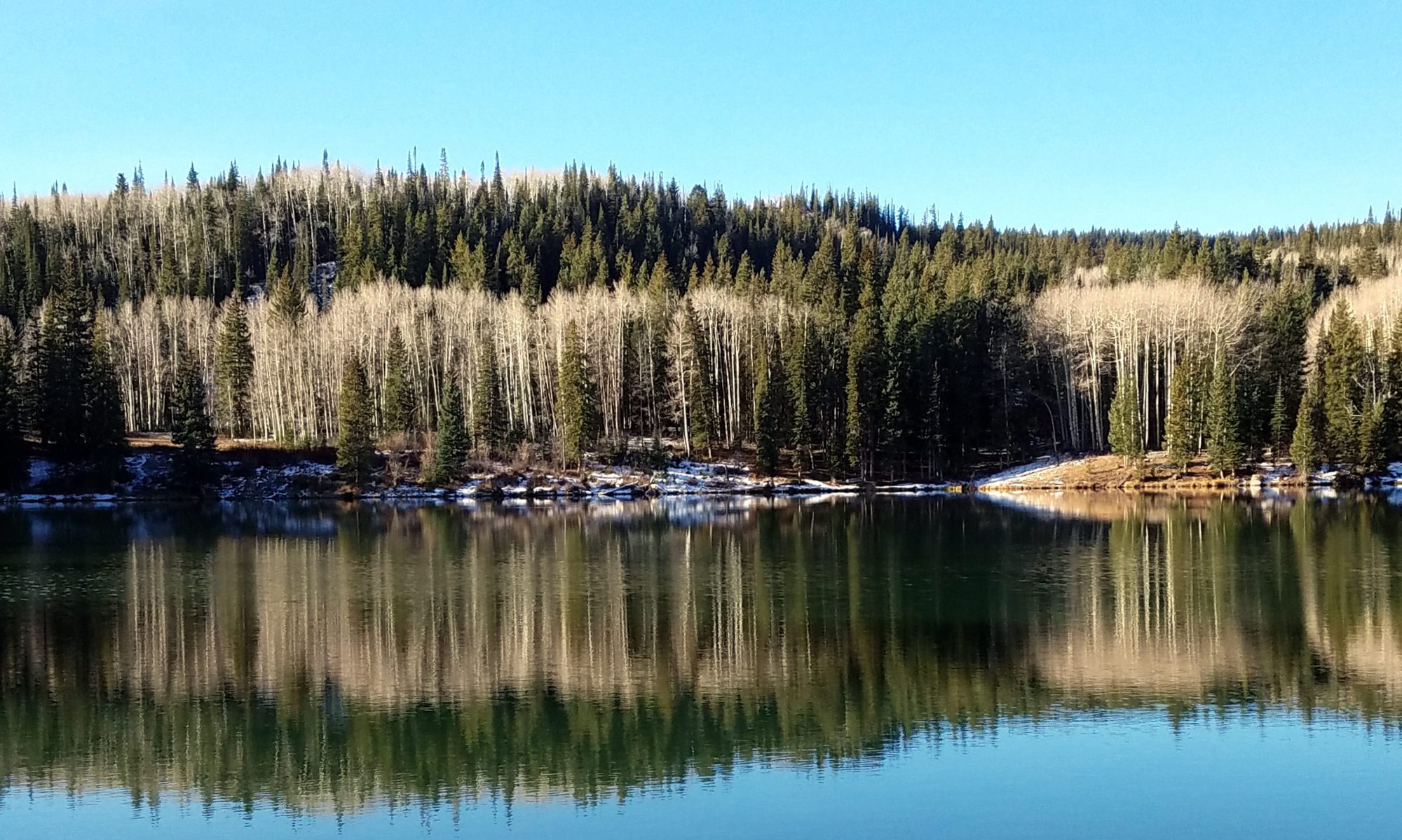
Malta

Where is your Malta? Odd question, it arises from one of the great stories from Paul’s life. You might recall that God told Paul he would testify in Rome. We all want that level of clarity in our lives. We want God to speak directly to us in words that would be hard to misinterpret. I don’t know about you, but that very seldom happens in my life.

Acts 23:11, “The following night the Lord stood near Paul and said, ‘Take courage! As you have testified about me in Jerusalem, so you must also testify in Rome.”‘

God didn’t tell Paul to take route 6 to the intersection of Route 9, turn left, and there you are. Paul’s destination was clear, but the journey was not. Paul may or may not have known what he would do in Rome, but he knew with certainty that he would get there. Can we say that about our destination?

“There will be no peace in any soul until it is willing to obey the voice of God.” – D.L. Moody

The why of Paul’s journey was obedience. The what, when, and how we’re not as clear. Paul’s journey to Rome mirrors our journey in life. It all starts with why. Rome was the epicenter of all knowledge and culture. It was the place that new ideas went viral. It was where God’s story would get legs. God’s story would travel to all the distant parts of the Roman Empire. The why was to testify to the greatness of God.

Paul took a circuital route to get to Rome. But eventually, they put him on a ship headed that way. It was not a journey to proclaim the Gospel; it was a journey to stand trial, but the why was still the why.

Isaiah 1:19, “If you consent and obey, you will eat the best of the land”

MALTA

Here is where Malta comes into play. A great storm arises, putting Paul’s ship in pearl. Paul’s confidence in God assures him that he will not perish but will somehow survive to continue to Rome. But, unfortunately, the ship runs aground on the small island of Malta. Now at this point, Paul could consider this a time out. He could have guessed that evil had set up a roadblock, and God would have to clear it. He could have chilled out until the journey continued; his destination was Rome, not Malta.

Are you in Malta? Have your plans been waylaid? Do you feel you have a greater destiny but are sitting on the beach waiting for the next boat going your way? When we look around to see what lessons are to be learned during this sabbatical, do we see nothing? The wind has stopped, and the sail is slack; nothing to do but wait for the next breeze.

Publius, the chief official of Malta, had a father sick from fever and dysentery. Paul went to see him, prayed for him, put hands on him, and healed him. Many came to believe because of this. Paul knew that God did not waste time. Paul knew that his mission field was where he woke up that morning. There were great things in store for him in Rome, but he wasn’t in Rome; he was where God wanted him that day.

1 Peter 3:15, “but sanctify Christ as Lord in your hearts, always being ready to make a defense to everyone who asks you to give an account for the hope that is in you, yet with gentleness and reverence.”

From there, Paul spent time in Syracuse, Rhegium, and Puteoli before reaching Rome. At each of these ports, he had to stay several days as the ship unloaded and loaded cargo. Acts tell us that at each port, Paul preached the Gospel.

THE SHORTEST PATH BETWEEN TWO POINTS IS A STRAIGHT LINE

If you are studying geometry, that is true; if you are studying the Gospel, it is not. We all have to spend time in Malta. We all have to take a deep breath, look around and see what God has for us to do where we are. If we get too fixated on the destination that we lose the journey, we have lost a valuable piece of God’s story for our lives. If we spend too much time trying to understand what God ultimately wants us to be, we lose the joy and passion of the journey God has us on.

The Atlanta Braves just won the World Series; one of the feel-good stories concerned Freddie Freeman. Freddie has been a long-time Braves player. He hit a home run in the final innings of the clinching game. As Freddie rounded third, heading to home plate, he looked at his wife and son in the audience and broke out into a wide grin. When asked about this, he said (paraphrase) I saw my son and remember when I was his age, lying awake at night dreaming of hitting a home run and winning the World Series. Finally, my son got to see his dad do that.

1 John 4:18, “There is no fear in love. But perfect love drives out fear, because fear has to do with punishment. The one who fears is not made perfect in love.”

Folks, as God rounds third, He sees us and grins. He knows we lay awake at night with visions of greatness. He sees our future with great pride and love. So do not miss the journey thinking about the destination. Instead, live the moments that God gives you as worship to Him. Remember that God hits the home runs, and we get to cheer with pride and say, “That’s my dad.”

Ephesians 3:18-19, “And may you have the power to understand, as all God’s people should, how wide, how long, how high, and how deep His love is. May you experience the love of Christ, though it is too great to understand fully. Then you will be made complete with all the fullness of life and power that comes from God. “

The Illusion of Prosperity

I have been thinking about this for some time. I’m trying to figure out what to say and how to say it. I have seen firsthand the plight of the 40% of the world’s population that lives on less than two dollars a day. I have looked into their eyes, I have seen how they live. My focus has been on these people called The Majority World (Africa, Asia, and Latin America). God has given me a skill set, knowledge, and experience that He wants me to use to help these people in any little way I can. Today I look in the opposite direction. I’m looking at one of the most prosperous nation in the world.

Lamentations 3:19-25, “Remember my suffering and my aimless wandering, the wormwood and poison. My soul continues to remember these things and is so discouraged. “The reason I can still find hope is that I keep this one thing in mind: the Lord’s mercy. We were not completely wiped out. His compassion is never limited. It is new every morning. His faithfulness is great. My soul can say, ‘The Lord is my lot in life. That is why I find hope in him.’ The Lord is good to those who wait for him, to anyone who seeks help from him.”

The story I want to tell today is not about The Majority World, in a small way it is. I was raised in the Midwest in a small farm community. Even though I have spent most of my life away from my childhood home, I still identify it as my home. I have returned twice a year, almost every year for a half-century. I have a vision infused deep within my brain of idyllic small-town America. It fosters a feeling of fondness, wholesomeness, and community that comforts me. This year as I sat in the park, listening to a local rock band sponsored by the City for “Fun Days,” I suddenly realized I was wrong.

THE GROWTH OF A COMMUNITY

First, let me tell you a little history of my home town. My hometown was established in 1836. A gristmill was built because the nearby river had a 15-foot waterfall that provided hydropower. The Illinois and Michigan Canal was to be constructed nearby to provide transportation. Unfortunately, the depression of 1837 bankrupt the state government, and construction on the canal stopped until 1848. The railroad arrived about 1850, becoming the preferred mode of transportation. The great news for my hometown is that industry grew with the hydropower and advent of the railroad. By the 1880s, raceways were built to provide mechanical power to the growing industry sector. By 1911 the raceway helped provide electrical power to the City. My hometown was one of the first to have electric trollies. Growing up, I still remember the rail tracks embedded in the streets from the trolley. Unfortunately, the trolley system went out of service during the Great Depression.

By the early 1900s, an eight-story Carton Factory was built provided ample employment for the City. Today that brooding brick building still towers over Main Street. It became the lifeblood of the community. It operated until 1960. The Federal Government finished Interstate Highway 80 just ten miles north of town in 1967, forever changing the traffic pattern away from my hometown. The power plant that used to power the Carton Factory, and my hometown stopped producing in 1989.

I was fortunate that I grew up in the ’50s and ’60’s when my hometown was called the City of Churches. It was a small town but economically healthy. To this day franchise systems bypass my hometown. All the drug stores, grocery stores, gas stations, restaurants, banks, hotels, news paper and even telephone company are local family-owned businesses. We were a community.

THE FALL OF MID AMERICA

I should have noticed it. I should have picked up on the clue when the city motto was changed to the City by the River. I should have seen it when the Carton Factory closed, then the power plant, then the High School, and finally two of the three grade schools. But I didn’t. It was still the small town I grew up in and loved.

I didn’t notice that 100% of the students were now on the free lunch program. I didn’t notice that the shops along Main Street were now bars and Slot Machine Outlets. I didn’t notice that the once vibrant three story hotel on Main Street was now a flophouse for the down and out. I didn’t live there, so I didn’t notice that unemployment was a way of life; Welfare, Unemployment, Food Stamps were lifelines. People didn’t have careers or professions; they had a series of disassociated jobs, mostly at minimum wage. They worked off the books because it wouldn’t reduce their benefits. Working at $5.00 an hour tax-free was better than minimum wage at a burger joint.

That night in the park, what I did notice was a lack of hope. A dark future permeated everyone in the park. Even those with steady jobs felt the pain of their friends and relatives. The City was surviving but on life support. Without government programs, the City would dry up and blow away. Instead, the residence now made life livable with alcohol and more potent stimulants.  I couldn’t help but think of the kids. What was their future? Would they slowly die from inside like the rest of the City?

The decay of small towns is happening all across America. Of the 19,000 incorporated cities in the United States, over 16,000 have a population under 10,000 people.

MY LAMENT

I guess what makes this story hard is that I have no answers. There are four levels of poverty; spiritual, being, relational, and material. Politicians and governments concentrate on material poverty because it is easy to see and measure. They throw money and programs at the result of poverty, not the source. The foundation to recovering from material poverty is to overcome spiritual poverty. In Christ, there is both a hope for the future and a prescription for achieving that hope. With faith in God’s promise through Christ we start to better understand our true worth. We also start to understand the importance of not only lifting ourselves, but those around us. Finally, we create a material environment that sustains our purpose. With Christ-centered hope, anything can be accomplished; people fall back on old habits without it. Generational, systematic, cultural poverty was not created in a generation and will not be overcome in a generation.  Without schools, there will be no jobs, and without jobs, there is no need for schooling. Without hope, no-one cares.

It is a lament. I have no answers; I can only pray and serve. The results belong to God.

Isaiah 40:28-31, “Don’t you know? Haven’t you heard? The eternal God, the Lord, the Creator of the ends of the earth, doesn’t grow tired or become weary. His understanding is beyond reach. He gives strength to those who grow tired and increases the strength of those who are weak. Even young people grow tired and become weary, and young men will stumble and fall. Yet, the strength of those who wait with hope in the Lord will be renewed. They will soar on wings like eagles. They will run and won’t become weary. They will walk and won’t grow tired.”

There is a great book discussing the complexity of poverty entitled “When Helping Hurts.” By Steve Corbett and Brian Fikkert.